The Center for Cosmetic Surgery
725 Heritage Road #100
Golden, CO 80401
Phone: (303) 278-2600
Monday – Friday: 8 a.m.–5 p.m.
The Center for Cosmetic Surgery
755 Heritage Road #100
Golden, CO 80401
Phone: (303) 279-6100
Monday – Friday: 8 a.m.–5 p.m.
The Center for Cosmetic Surgery
501 South Cherry Street #900
Denver, CO 80246
Phone: (303) 951-2100
Monday – Friday: 8 a.m.–5 p.m.
The Center for Cosmetic Surgery
501 South Cherry Street #900
Denver, CO 80246
Phone: (303) 951-2102
Tuesday – Friday: 8:00 a.m.–5 p.m.
The Center for Cosmetic Surgery
6985 Tutt Blvd Ste 110
Colorado Springs, CO 80923
Phone: (719) 380-1823
Monday: 10 a.m.–1 p.m.
Tuesday – Friday: 8 a.m.–5 p.m.
- Step 1: Facelift Surgery Goals
- Step 2: Making the Incision
- Step 3: Creating a Pocket
- Step 4: Understanding the Layers
- Step 5: Trimming and Tightening
- Step 6: Improving Jaw Definition
- Step 7: Firming the Neck
- Step 8: Removing Extra Skin
- Step 9: Placing Fine Sutures
- Step 10: The Final Result
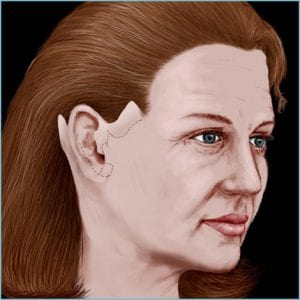
Our Colorado facelift specialists create natural-looking results by carefully re-draping the skin after tightening the underlying SMAS and platysma tissues. The elevated skin overlaps the initial incision and the ear. They trim the overlapping skin where it meets the original incision, allowing them to use fine sutures to stitch the edges together without the tension that can make the results look too tight.
Mini Facelift vs. Traditional Facelift
The removal of excess, overlapping skin using either the traditional or mini facelift technique is similar. There is, however, an important difference that can create an unwanted bald spot. Because surgeons make the initial incision in a traditional facelift within the temporal hairline (above the sideburn), rather than at the temporal hairline (at the edge of the sideburn and non-hair bearing skin), the overlapping skin in this region includes the sideburn. This causes the removal of hair in this region and elevation of the sideburn, leaving a bald area where the sideburn belongs.
During a mini facelift, because our surgeons place the incision at the sideburn hairline, there’s no displacement of the hairline, and no bald spot is created.
Step 9: Placing Fine SuturesMaking your cosmetic goals a reality is easier than ever with our flexible financing options:
Learn More About Financing Options