
The Center for Cosmetic Surgery
725 Heritage Road #100
Golden, CO 80401
Phone: (303) 278-2600
The Center for Cosmetic Surgery
755 Heritage Road #100
Golden, CO 80401
Phone: (303) 279-6100
The Center for Cosmetic Surgery
501 South Cherry Street #900
Denver, CO 80246
Phone: (303) 951-2100
The Center for Cosmetic Surgery
501 South Cherry Street #900
Denver, CO 80246
Phone: (303) 951-2102
The Center for Cosmetic Surgery
6985 Tutt Blvd Ste 110
Colorado Springs, CO 80923
Phone: (719) 380-1823
Eyelid Surgery
- .5-1.5 Hour Surgery
- Back to Work: 1-2 Weeks


As we age, a complex series of changes takes place in the tissue around the eye. Skin becomes thinner and less elastic, fat may protrude or atrophy and even the bone can resorb, lending less support to the soft tissues. Many of these changes can be improved or corrected surgically with blepharoplasty, often called eyelid surgery, in Denver, CO. Men and women from Colorado Springs, Fort Collins, and nearby cities trust the experienced plastic surgeons at The Center for Cosmetic Surgery for facial plastic surgery performed with great precision and care.
Eyelid Lift
Before & After Photos

Case #243

Case #13

Case #11299

Case #237

Case #494
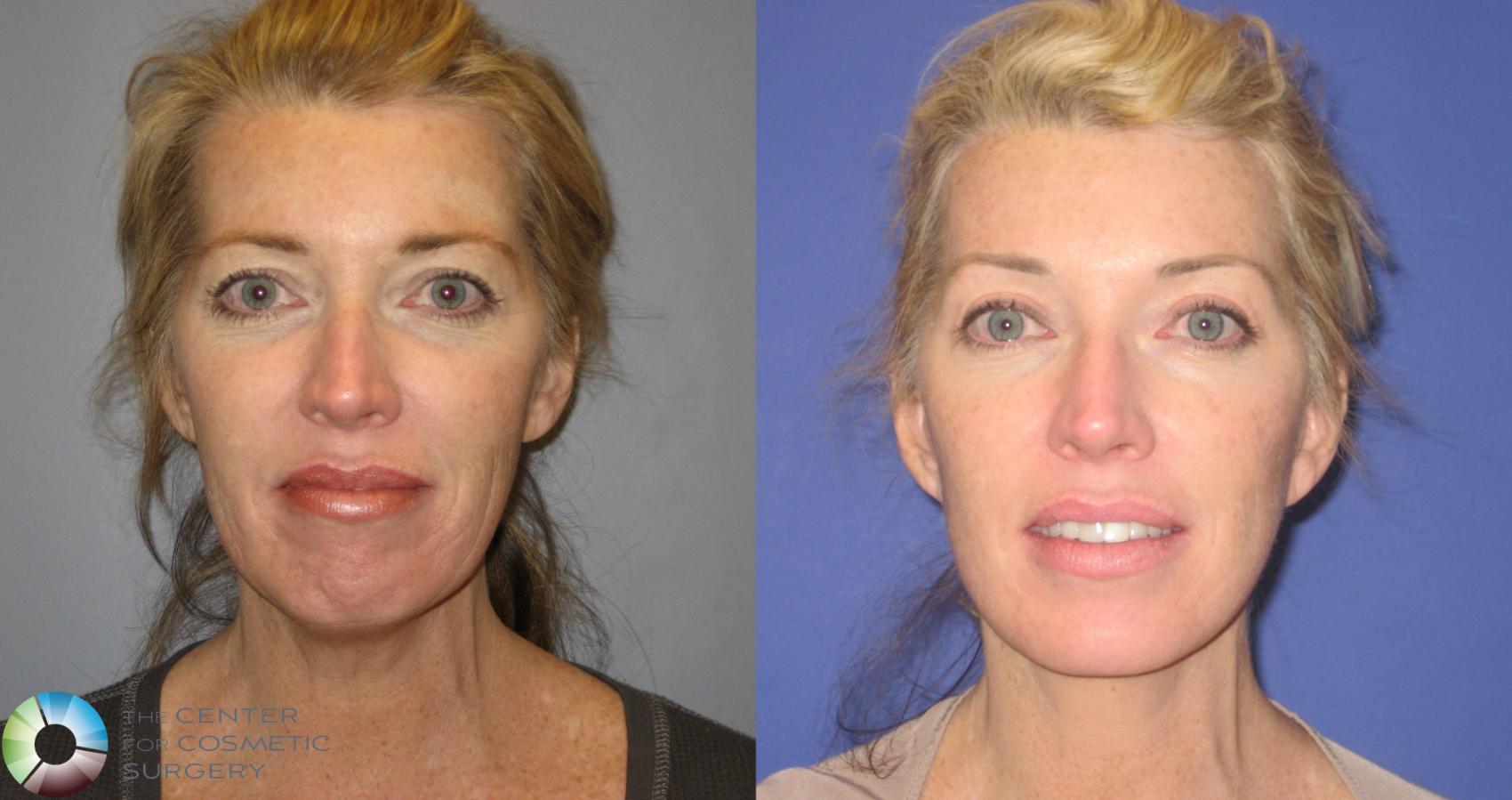
Case #155
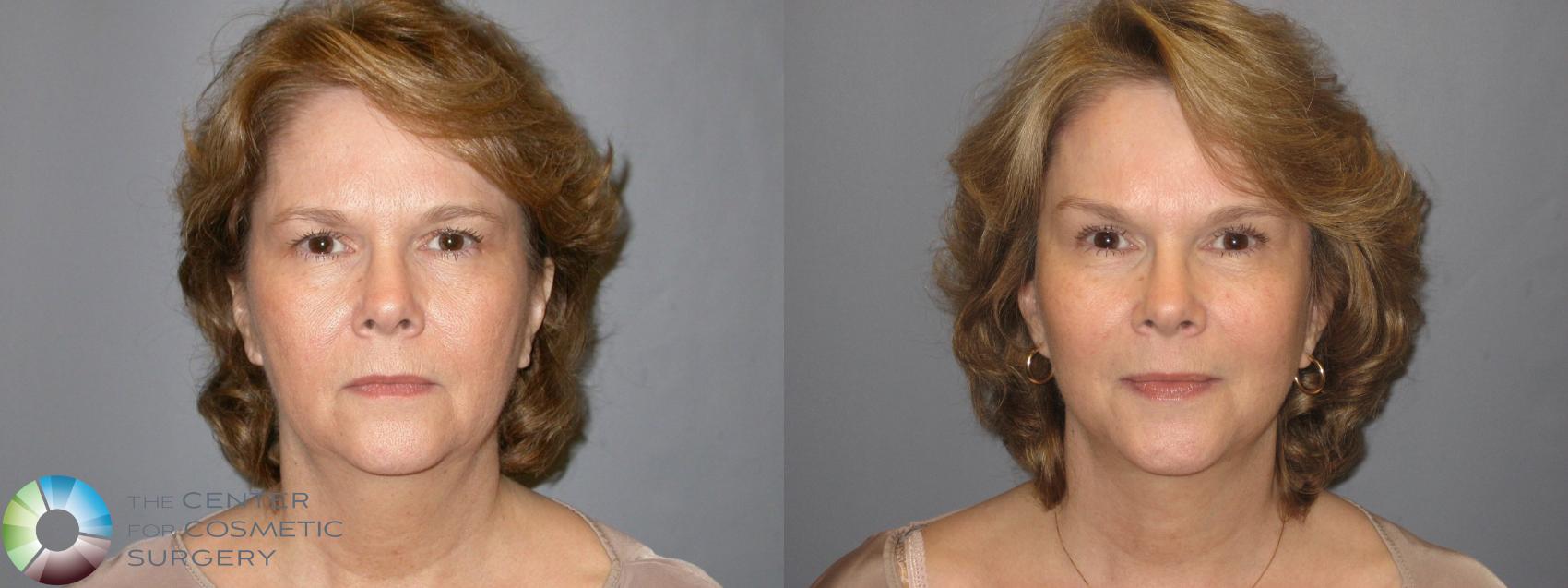
Case #116
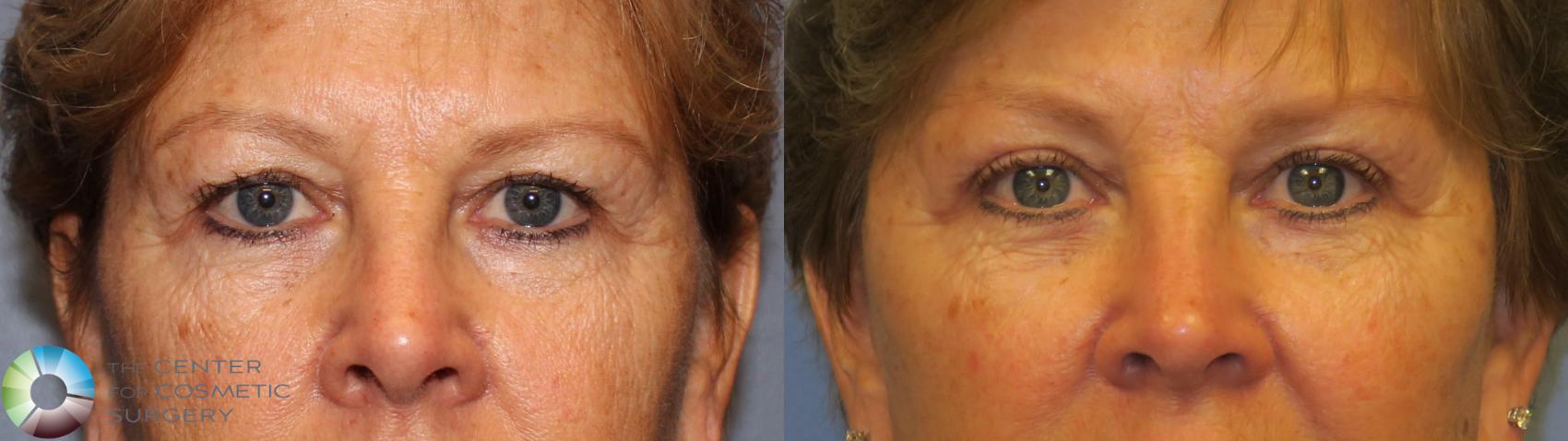
Case #11486
Keep in mind that each patient is unique and your results may vary.
When Should You Get Eyelid Surgery?
What Is Upper Eyelid Surgery?
Surgical improvement of the upper eyelid is, for the most part, a matter of removing the excess skin. The lower border of the incision is placed in the fold of the upper lid, while the upper margin is determined by the degree of redundancy. In some cases, there is excess fat, as well, which presents as an area of puffiness in the central corner of the lid. This is easily removed through the same incision that removes the skin. Very fine sutures are used to close the incision precisely.
What Is Lower Eyelid Surgery?
An aged appearance in the lower lid can be due to a number of factors, the most commonly addressed surgically include:
- Fat in the lower lid, which may create puffy bags under the eyes, is best removed via a transconjunctival approach involving a small incision inside the lower eyelid mucosa. This technique avoids an external incision.
- Excess lower eyelid skin can be removed as a “pinch” procedure which preserves the structural integrity of the lower lid and reduces complications like prolonged swelling and lid malposition.
- Loss of elasticity and tone in the lower eyelid skin, which may be caused by sun damage, smoking, or age. Removing skin will tighten the area, but won’t change the skin itself. Laser resurfacing, chemical peels, and dermarolling are all useful techniques for improving the skin quality and can be used in conjunction with lower eyelid surgery.
Any or all of these factors may be present, and combinations of these techniques are frequently used to give patients a harmonious, attractive result.
A Reputation Built on Results

Can I Combine My Eyelid Surgery With Other Procedures?
Your surgeon may recommend combining additional procedures with your eyelid lift for more complete facial rejuvenation. Options include:
Post-surgical discomfort is typically mild to moderate with any facial procedure. Swelling and bruising, while inevitable, will dissipate within 1 to 2 weeks. With a little strategic makeup, most people find they are ready to go out in public in 2 weeks or less.

Fact & Fiction About Eyelid Surgery
The upper lids and brow are often treated together but may be individually addressed.
In some patients, the appearance of aging in the upper lid is confined to the upper lid itself. These people require only an eyelid lift to see significant improvement in this area. In many patients, however, the upper eye area looks aged because of the upper eyelid and the position and/or shape of the eyebrow. In these patients, an upper eyelid lift may be performed in conjunction with a brow lift to more completely correct the aging process, as neither procedure alone would be optimally effective.
Hollowed out eyes are not attractive or youthful.
Twenty years ago, an upper eyelid lift typically involved removing as much skin and fat as possible in a misguided effort to create a youthful appearance. In fact, these aggressive operations often left patients with a hollowed-out, skeletonized orbit that made them look even older and less robust. Modern techniques conservatively remove skin and fat from the upper and lower lids, and many complementary treatments (such as fillers and fat grafting) actually replace volume lost due to the aging process.
How to Choose a Plastic Surgeon for Your Eyelid Surgery
For optimal safety and results, it’s important to choose your surgeon carefully. Important guidelines include:
- Review many impressive before-and-after photos
- Find a surgeon who specializes in cosmetic plastic surgery
- Seek a surgeon who upholds the proper credentials
- Make sure the surgeon uses only an accredited, state-of-the-art surgical facility
- Decide, if upon meeting the surgeon, you make a connection
Our Exceptional Plastic Surgeons
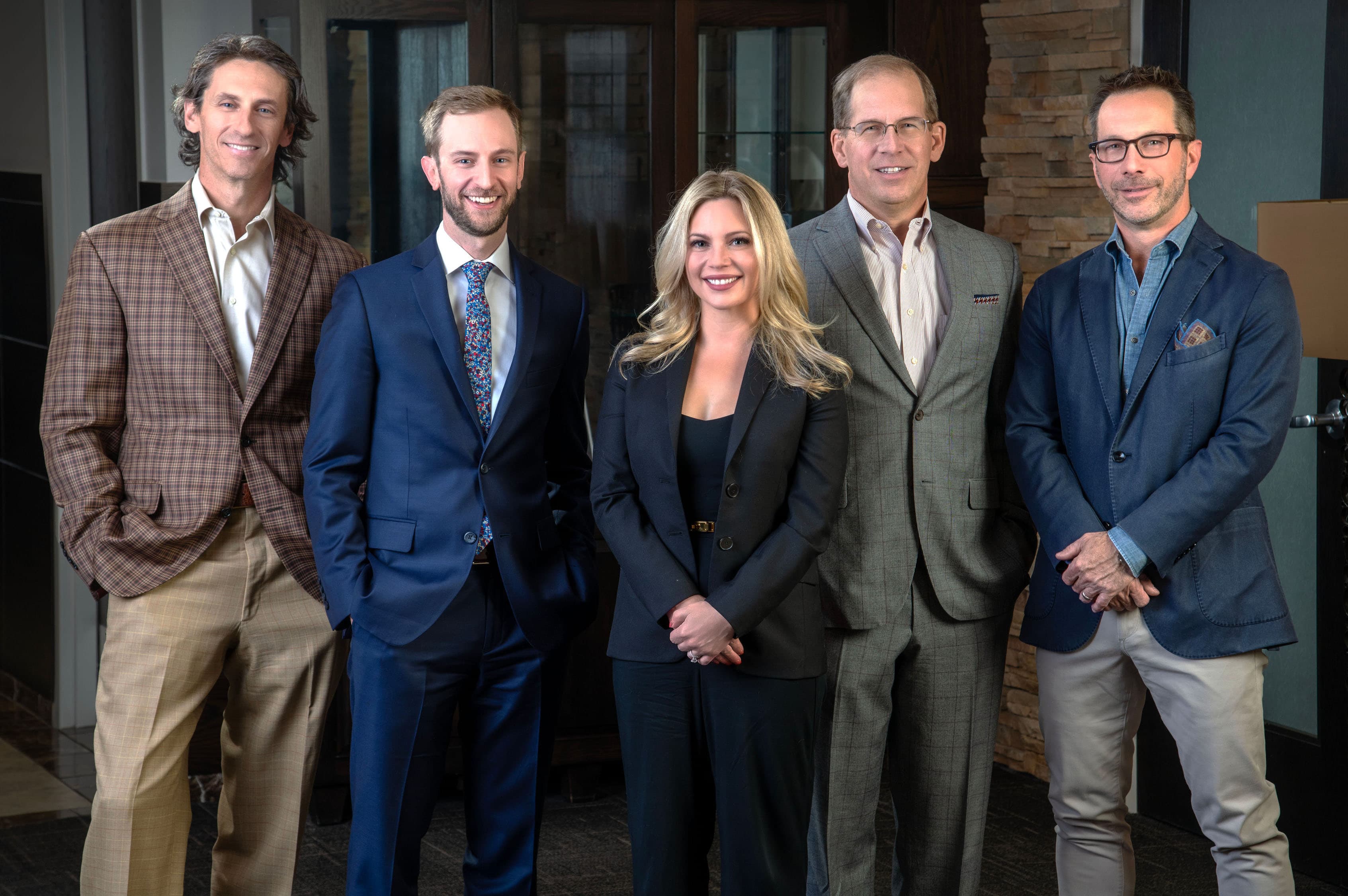
Our experienced plastic surgeons Dr. Steven Vath, Dr. Andrew Wolfe, Dr. Paul Steinwald, and Dr. Matthew Freeman, and the newest member of our team Dr. Teresa Cunningham lead our patient-centered practice with warmth, honesty, and respect.
Identifying Good Eyelid Lift Results
The eyes should have a natural, nonsurgical appearance.
Perhaps the most important characteristic of an expertly performed blepharoplasty is that it leaves the patient with an unoperated appearance. Any aspect of the procedure that is overdone can alter the normal shape of the eye and these distortions are noticeable even to the untrained eye. The lower lid, in particular, is an area that responds poorly to an overly aggressive procedure.
The brow, upper lid, and lower lid should be aesthetically balanced, with similar degrees of aging and laxity.
Rejuvenation of the upper face must include an assessment of the brow, upper lids, and lower lids. When indicated, all 3 areas should be addressed to maintain harmony and prevent a discordant appearance.
To discover a happier outlook on life with eyelid surgery, request a consultation using our online form or by calling (303) 278-2600. This relatively low impact surgery can give you tremendous improvement in your appearance. The Center for Cosmetic Surgery has a plastic surgery office just outside of Denver in lovely Golden, Colorado, and another located downtown in Cherry Creek, Denver.