
The Center for Cosmetic Surgery
725 Heritage Road #100
Golden, CO 80401
Phone: (303) 278-2600
The Center for Cosmetic Surgery
755 Heritage Road #100
Golden, CO 80401
Phone: (303) 279-6100
The Center for Cosmetic Surgery
501 South Cherry Street #900
Denver, CO 80246
Phone: (303) 951-2100
The Center for Cosmetic Surgery
501 South Cherry Street #900
Denver, CO 80246
Phone: (303) 951-2102
The Center for Cosmetic Surgery
6985 Tutt Blvd Ste 110
Colorado Springs, CO 80923
Phone: (719) 380-1823
Mini Facelift
- 2.5-3 Hour Surgery
- Back to Work: 1-2 Weeks


You’re fit, active, and happy, but your face tells a different story. The experienced plastic surgeons at The Center for Cosmetic Surgery can give you back a naturally rejuvenated look with a mini facelift in Denver. Over the past few decades, facelift techniques have evolved, becoming more effective, less disruptive, and safer than ever. With today’s advanced surgical techniques, our talented facelift surgeons help women and men from Colorado Springs, Fort Collins, and other nearby communities reflect the youthful, vibrant way they feel inside.
Mini Facelift
Before & After Photos

Case #849

Case #96

Case #498
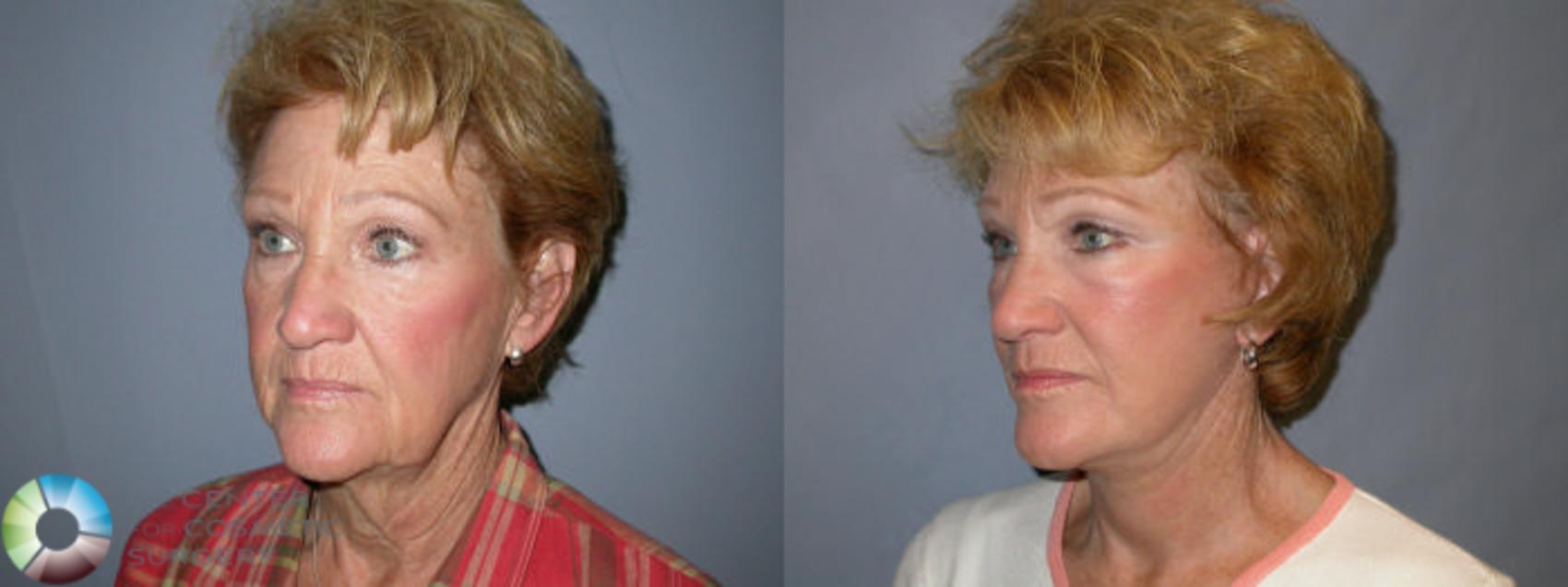
Case #13

Case #654

Case #11298

Case #928
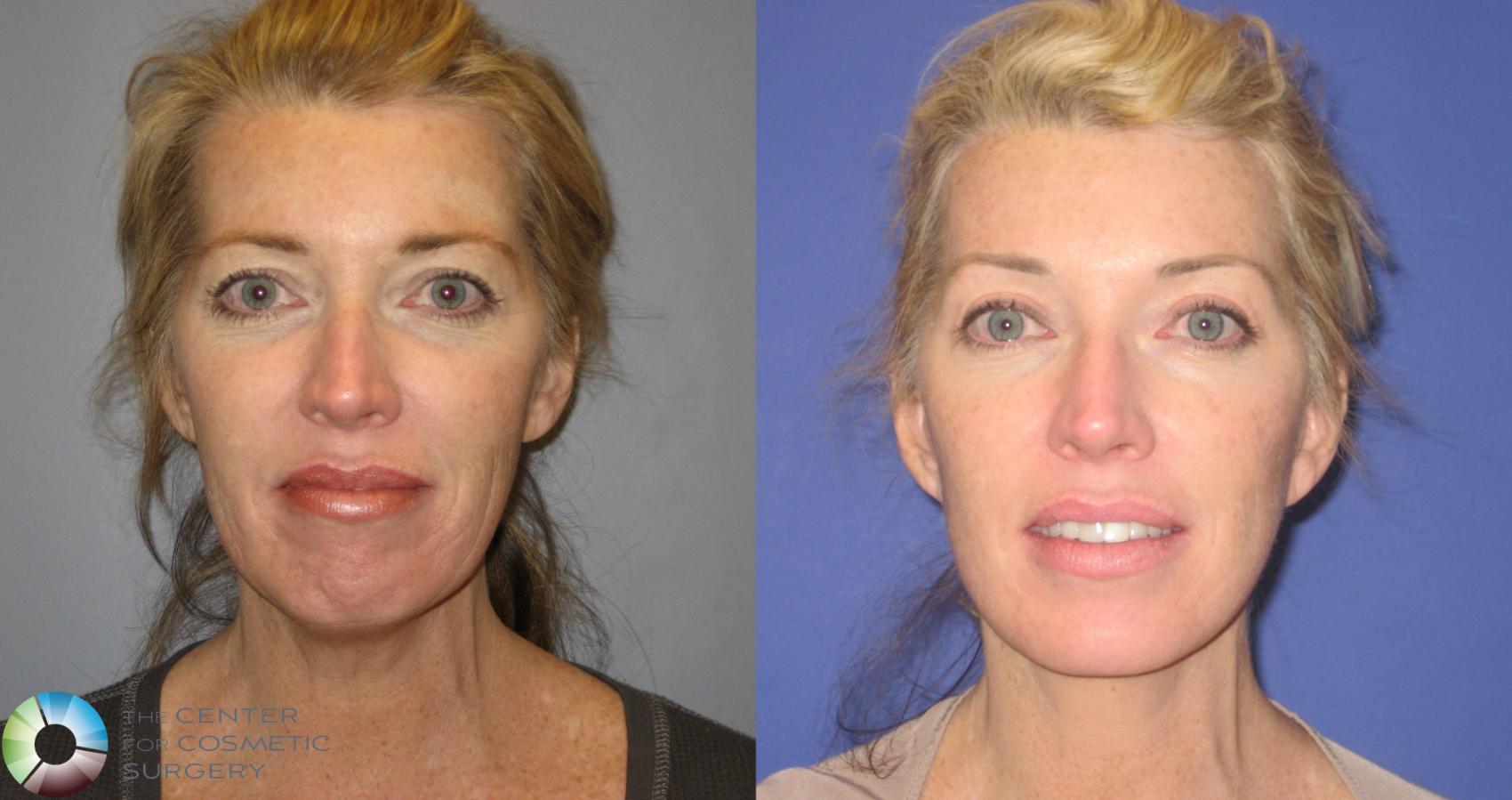
Case #155
Keep in mind that each patient is unique and your results may vary.
Is a Facelift Right for Me?
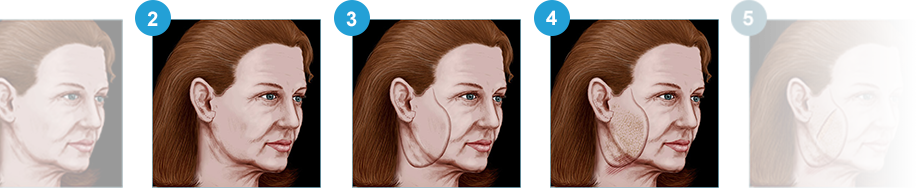
Designed to rejuvenate the lower 2/3 of the face, a face lift elevates and tightens the tissues of the cheeks, jawline, and neck. While there are many different types of facelifts, most patients can attain all the benefits they’re seeking with a mini face lift by our Denver specialists. To get a better sense of the techniques that may be used during your facelift procedure, along with detailed illustrations, be sure to visit our Step-by-Step Facelift Surgery Guide.
What Is a Mini Facelift?
A mini facelift, also called a short scar facelift, is essentially a scaled-down version of a full facelift. With this technique, your surgeon makes short incisions in front of and behind your ears, lifts your lower facial skin away from your jaw and neck, tightens the underlying strength layers of the face and neck, removes excess lax skin, and uses tiny sutures to anchor the skin in place. You don’t get long scars down the hairline behind the ears, a scar under the chin, or a disturbed hairline at the sideburn; you do get the smooth, elevated cheeks, sharp jawline, and tighter-looking neck you had several years ago.
A Reputation Built on Results

What Is a Traditional Facelift?
If you’re older or your skin has suffered extensive environmental damage, you may be a better candidate for a traditional, full facelift. In this case, the surgeon creates an incision that winds into the hairline behind the ears and a small incision beneath the chin in order to manage more extreme neck laxity and jowling. Most patients do not require these extra maneuvers to achieve the youthful change they desire.
Other Facelift Options
New names for facelifts seem to spring up weekly, catchy brands whose main purpose is to promote demand by creating illusions—perhaps the unrealistic expectation that you’ll recover from the procedure in just a weekend, or the notion that surgery will pose very little disruption to your lifestyle.
Our surgeons know that no matter what you call your facelift, the strategy is the same: provide the proper amount of lift for a natural look with minimal recovery time. If a small facelift will do, a full facelift will unnecessarily increase your cost, risk, and recovery time. By the same token, a limited procedure may be inappropriate if you have significant laxity and heavy tissues and desire an aggressive correction of facial aging. The truth is that even a mini facelift procedure is still surgery. No facial cosmetic surgery can be expected to deliver significant improvement without at least several days of recovery time.
Can I Combine My Facelift With Other Procedures?
Your surgeon may recommend combining additional procedures with your mini facelift for more complete facial rejuvenation. Options include:
- Eyelid surgery
- Mini brow lift
- Neck lift
- Liposuction of the neck
- Fat grafting
- CO2RE or LUX 1540 laser skin resurfacing
With most facial procedures, even combinations, you should experience just mild discomfort after surgery. Bandages will be off in a day or 2. Bruising and swelling usually subside within 1 to 2 weeks. You’ll be showing off the rejuvenated you in no time.
Will a Mini Facelift Accentuate My Thin Lips and Give Me a Pulled Appearance?
The mini facelift will not affect the appearance of your lips. The goal of a mini facelift is to lessen the wrinkles on your face, decrease jowls, elevate the cheeks, and tighten the neck. You will not have a pulled appearance. A facelift should not pull on the corners of the mouth or the lips and therefore, has no effect on the mouth or lips whatsoever. We can use Surgisil lip implants to plump thinning lips if desired.
Fact & Fiction About Mini Facelift
- A mini facelift will not address the brow or eyelids. A brow lift and/or eyelid surgery can be safely performed at the same time as a mini facelift to treat these areas.
- Lighter anesthesia or no anesthesia during a procedure does not change the nature of the procedure itself.
Our Exceptional Plastic Surgeons
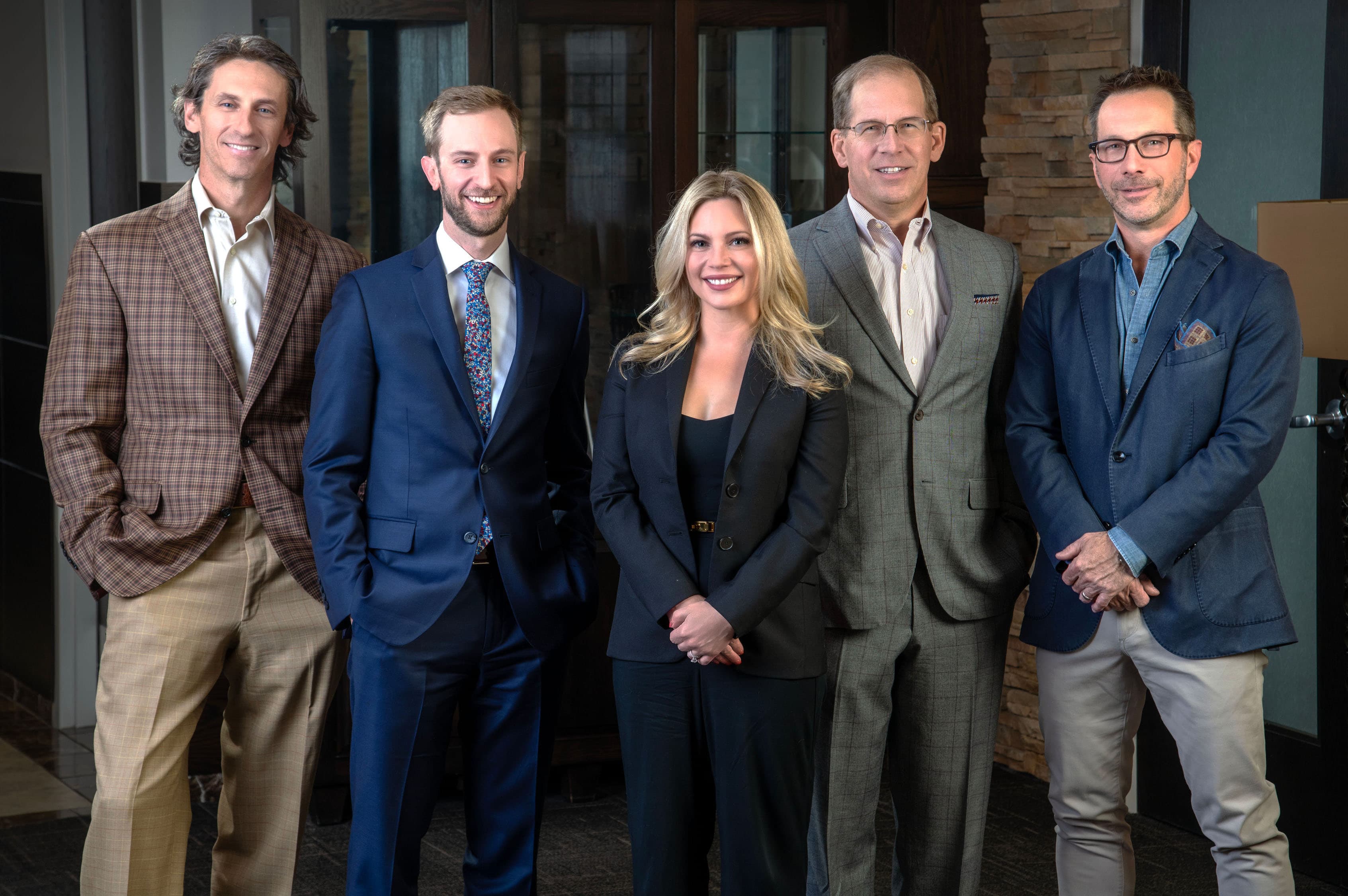
Our experienced plastic surgeons Dr. Steven Vath, Dr. Andrew Wolfe, Dr. Paul Steinwald, and Dr. Matthew Freeman, and the newest member of our team Dr. Teresa Cunningham lead our patient-centered practice with warmth, honesty, and respect.
How to Choose a Facelift Surgeon
For optimal safety and results, it’s important to choose your surgeon carefully. Important guidelines include:
- Review many impressive before-and-after photos.
- Find a surgeon who specializes in cosmetic plastic surgery.
- Seek a surgeon who upholds the proper credentials.
- Make sure the surgeon uses only an accredited, state-of-the-art surgical facility.
- Decide, if upon meeting the surgeon, you make a connection.

Identifying Good Mini Facelift Results
Your face is the first thing people see when meeting you. At The Center for Cosmetic Surgery, we know how important it is to have natural-looking facelift results. In addition to reviewing their experience, qualifications, and before-and-after photos, ask yourself the following questions:
Do their mini facelift results give the patient a rested, more youthful appearance without looking tight or overdone?
The goal our surgeons have for their patients who undergo a mini facelift is for them to look like a younger, refreshed and well-rested version of themselves, not someone else. The key to this is good surgical technique. A pulled look after a facelift is usually the result of putting too much tension on the skin and not tightening the underlying structures. Our surgeons always tighten underlying structures during their mini facelifts. These underlying structures that support the face are often misrepresented as muscle. All facial muscles are used either to chew or create facial expression; therefore, these muscles are never cut or sewn during any facelift procedure. A layer between the muscles and the skin called the SMAS (superficial musculo-aponeurotic system) is used to support the face, and this is the layer tightened in a mini facelift procedure.
Do the ears look natural and unaltered?
A telltale sign of a facelift is an earlobe that does not dangle in a normal fashion. This deformity, sometimes called “pixie ear”, can occur when a tight facelift distorts the earlobe, causing it to stretch toward the neck.
Are the scars well concealed?
An experienced surgeon takes care to place the incisions strategically where the resulting scars are not noticeable.
Our plastic surgeons apply techniques that are current yet proven, and the results they achieve for their facelift patients speak for themselves. The Center for Cosmetic Surgery has two plastic surgery offices conveniently located in the Denver metropolitan area. One is located just outside of Denver in lovely Golden, Colorado, immediately off 6th Avenue West and the other is located downtown in Cherry Creek, Denver. To learn what plastic surgery can do for you, request your consultation using our online form or simply call (303) 278-2600.